A few weeks ago, we spent four days in Philadelphia at the 40th Annual International Conference of the Association for Commuter Transportation (ACT26).
With so many mobility and TDM professionals in one place, it was a pretty good setting to step back from the day-to-day and ask a simple question:
“Where is enterprise mobility actually headed?”
Last year, when we attended ACT in New Orleans, we were still spending a lot of time understanding the US market, how organizations think about commuting, what TDM teams are solving for, and where the gaps in the existing ecosystem are.
This time felt different.
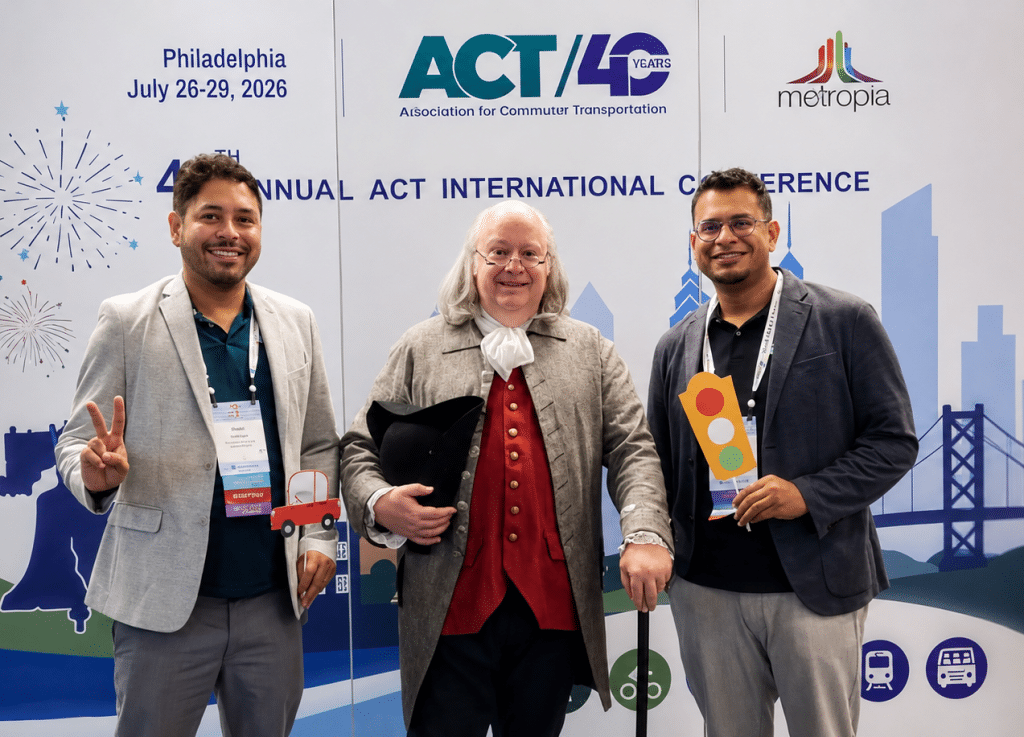
There was a lot more discussion about technology, AI, parking, employee experience, and, importantly, the operational complexity underlying all of it.
We came back with three takeaways:
AI needs to cut the work, not just add to the noise
There was, unsurprisingly, a lot of AI talk at ACT.
But the conversations that we found most interesting weren’t about adding another chatbot or putting an “AI-powered” label on an existing workflow.
They were about a more practical question: Does AI actually take work off someone’s plate?
For employees, that could mean getting an answer instantly through tools they already use, like Slack. For mobility teams, it could mean automated SLA management, smarter route optimization, and schedules that adapt as headcount, shifts, and employee locations change.
That’s the kind of AI we think is genuinely useful: technology that makes people do less repetitive work.
Parking and commute shouldn’t live in two different worlds
Another theme that came through strongly for us was the relationship between parking and commuting.
Parking and commute are often managed by the same TDM team. But having the same team manage them doesn’t always mean they have a complete picture of how employees are choosing to commute.
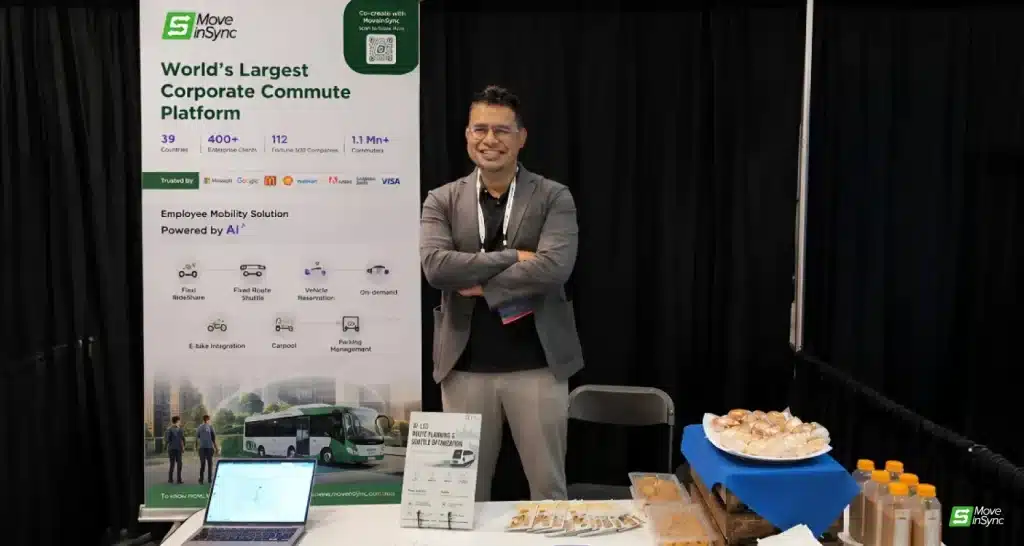
At MoveInSync, we’ve brought those choices together in one view. Employees can compare options like self-drive, shuttle or carpool, with a clear view of the costs, subsidies or incentives involved. TDM teams get a single view across those mobility options.
And that view extends into parking too. Beyond simply showing availability, it connects with HRMS and payroll, supports validation, benefits and expense management, and lets organizations simulate policy or pricing changes before rolling them out.
So, even if an employee parks at an offsite facility and takes a shuttle to the office, that journey can be managed on the same platform.
That, to us, is what a more connected approach to parking and commute looks like.
In a changing market, customers want a partner, not another vendor
This was perhaps our most important takeaway.
Enterprise mobility programs don’t stand still. Employee counts, policies, and workplaces change, and the technology supporting them needs to keep up.
That makes the relationship with a technology partner important. You don’t just need a platform that works today. You need one that can evolve with you.
At MoveInSync, we’ve been in this industry for 16+ years. Today, we work with 430+ companies and have a 99% customer retention rate.
For us, these numbers represent relationships that have lasted. We’re still independently run, still investing in the same core product, and still supporting customers who started their journey with us years ago.
For us, being a partner means continuing to build, improve, and adapt the technology as our customers’ mobility programs evolve.
Because enterprise mobility isn’t something you “set and forget”.
A Few Thoughts Before We Wrap Up
One thing we always enjoy about conferences like ACT is that the most useful conversations aren’t necessarily the ones you plan for.
Some of the best discussions I had in Philadelphia happened between sessions, at the booth, or over a quick tea. Different organizations are at different stages in their mobility journeys, but there was a genuine openness to sharing what is working, what isn’t, and where the industry still has room to improve.
That is probably what we value the most about being part of a community like this. You get to step outside your own product and market for a few days, and see the industry through someone else’s lens.
For us, Philadelphia was a good reminder that there is still a lot to learn from each other, and a lot of interesting work ahead.
Thanks to everyone who stopped by to meet us, shared their perspective, or made the time for a conversation. We hope to see many of you again soon.

 IN
IN  USA
USA  PH
PH  ZA
ZA  LATAM
LATAM  Global